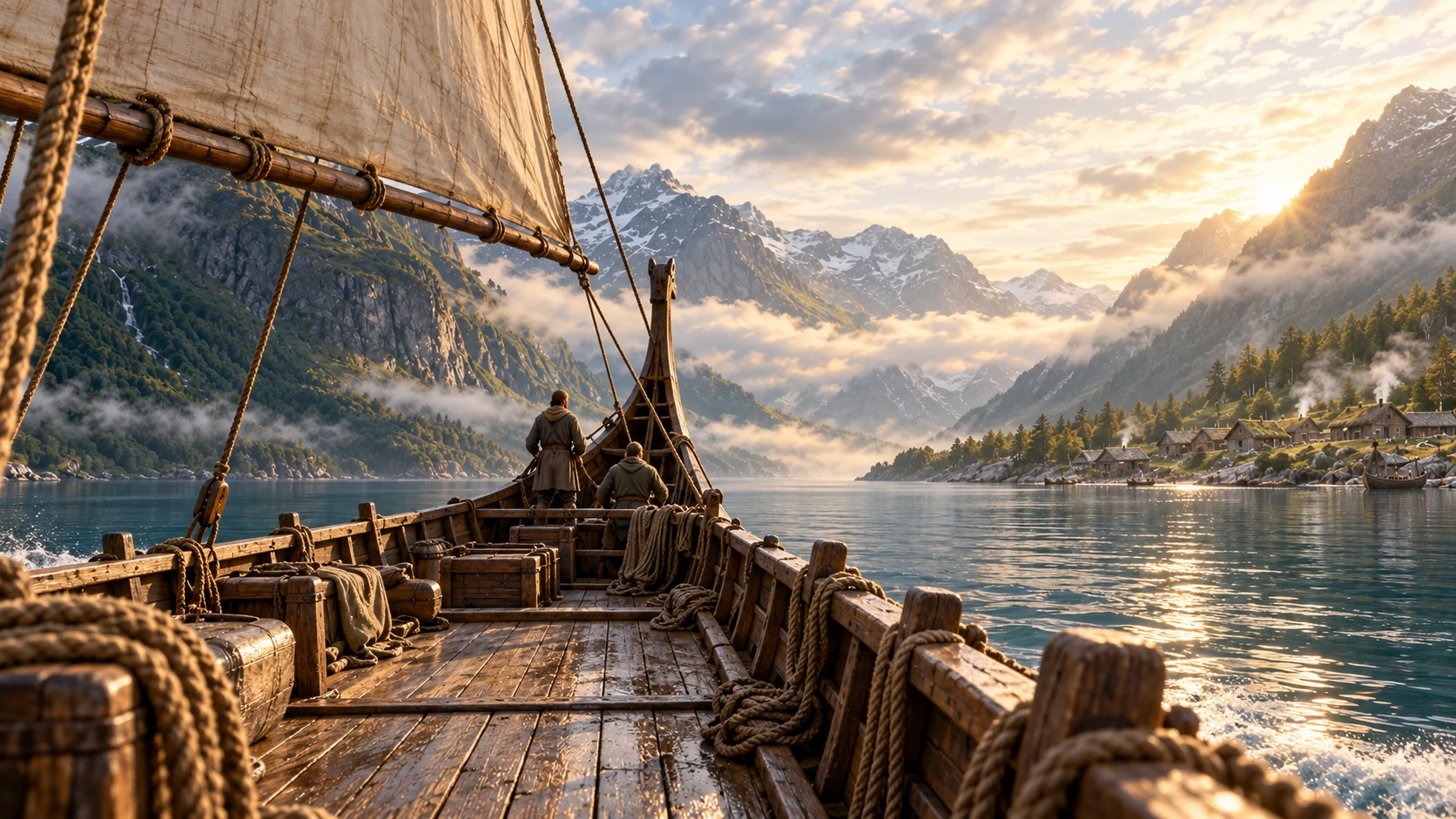
A view along the timber deck toward the bow, mountains and fjord settlement.

01 / THE HOMELANDS

Step into
Scandinavia.

Begin exploring

TOUR STOP / 01

Three homelands.
Many communities.

Start in Scandinavia: the region of Denmark, Norway and Sweden. Select a country to discover a place in its Viking Age story.

RussiaNorwaySwedenBelarusPolandLithuaniaLatviaEstoniaGermanyNetherlandsDenmarkUnited KingdomFinlandNORWAYSWEDENDENMARKFINLANDNorth SeaBaltic SeaN

SELECT A HIGHLIGHTED COUNTRY · MODERN BORDERS

A SCANDINAVIAN HOMELAND

Denmark

Ribe’s craftspeople made goods for a busy trading community. At Jelling, royal monuments record claims about kingship and a new Christian identity.

A CLOSER LOOK

A runic comb from Ribe and Harald’s larger Jelling stone.

Modern countries and coastlines are shown for orientation, using Natural Earth geographic data. These are not Viking Age political boundaries. Map data ↗

PLACE & IDENTITY

A region,
not one nation.

Viking society developed in Scandinavia, the region we now call Denmark, Norway and Sweden. These modern country names help us find places on a map, but their present borders do not show the political world of the Viking Age. People shared related languages and customs, while communities and rulers differed. Being from Scandinavia did not automatically mean someone spent their life raiding.

Read the map carefully. Hedeby belongs in this story of the Danish Viking world, but its remains are in present-day Germany.

WATER CONNECTED PEOPLE

From farms
to trading towns.

Water connected settlements. Early trading towns often grew beside natural harbours or fjords, where merchants could arrive by ship. Kaupang in present-day Norway and Birka in Sweden brought together craftspeople and traders. Birka stood on an island in Lake Mälaren, at a meeting point of waterways. In the Danish world, Ribe and Hedeby were important trading places. Hedeby is now in Germany, a useful reminder that modern borders can mislead us. These settlements linked farms and local workshops to much wider networks.